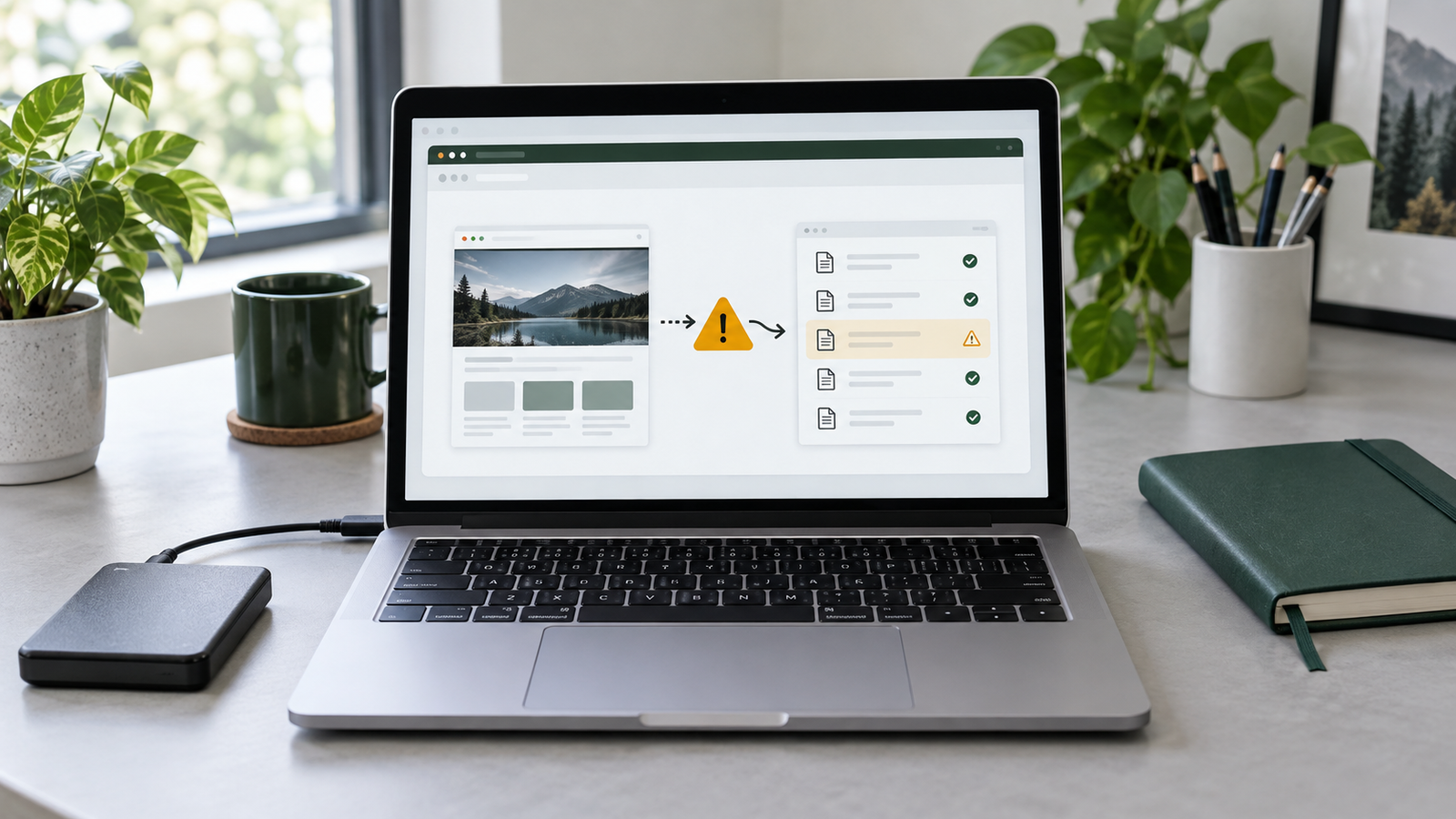
Website Firewall vs Malware Scanner vs Backups: What Do You Need?
Understand what each security layer does, where its limits are, and how to check your coverage with practical examples and an interactive self-check.
A hosting plan includes backups. A plugin advertises malware scanning. A separate service offers a website firewall. Are you paying three times for the same protection? Usually, these tools address different parts of the problem. Understanding that difference helps you ask for the right work and avoid assuming that a feature in your hosting panel covers everything.
The short answer: a web application firewall filters web requests; a malware scanner looks for signs of compromise within the material it can inspect; backups provide a way to recover earlier files and data. A sensible website security plan considers prevention, detection and recovery together, with someone responsible for acting when a problem appears.
What a website firewall does
A web application firewall, or WAF, evaluates HTTP traffic against rules. Depending on its deployment and configuration, it can block or challenge requests that match suspicious patterns, including some attempts to exploit application vulnerabilities. Cloudflare's WAF explanation describes this role and different deployment models.
Filtering incoming requests does not, by itself, remove malicious files already stored on a server. Nor should a WAF subscription be treated as evidence that every domain, endpoint or route to the website is covered.
Ask for a concrete check: which hostnames are protected, which rules are active, and who reviews a blocked legitimate request? Your contact form, file uploads and integrations should still work after protection is enabled. Arrange those checks with your provider rather than sending attack payloads to a production site.
What malware scanning can tell you
A scan's meaning depends on its coverage. Some tools inspect public pages; others can examine server files or database content. For example, Wordfence's scan documentation describes checks for malware and changes to known WordPress files. That is a product-specific example, not a capability you should assume every scanner includes.
A clean result means the tool did not report a finding within the checks it completed. It is not a universal certificate that every account, file and configuration is safe. A flagged file also needs context: a legitimate customization and an unauthorized modification require different responses.
Ask for a concrete check: what was scanned, did the scan finish, and who investigates an alert? Keep a copy and establish what a file does before accepting a repair or deletion. A scanner alert is useful only when it leads to a considered response.
What a usable backup includes
For a typical WordPress site, recovery needs both files and the database. WordPress's backup guide explains those two parts. A theme folder alone will not recover the database content, and a database export alone will not replace missing uploaded media.
The important business question is how much recent work you can afford to lose. As a simple example, if the latest usable backup is from midnight and a failure happens at 4 p.m., changes made during those 16 hours may need separate recovery. This is an illustration of the recovery gap, not a recommendation that every site use the same schedule.
Ask for a concrete check: when was a backup last restored successfully, where is the recovery copy held, and can an authorized person access it if the main hosting account is unavailable?
Three situations that expose the difference
The following are illustrative scenarios, not customer case studies or product test results.
A contact form stops working after a rule change
A site owner enables a new firewall rule and then stops receiving enquiries. Before switching off all protection, the developer compares the failed request with the relevant security event and tests a narrowly scoped correction. The lesson is operational: assign someone to verify the business workflow as well as the security setting. A large blocked-request count is not evidence that the enquiry form works.
Visitors report a redirect, but the firewall is active
The incident still needs investigation. Record the affected URL, timing and visitor conditions; do not treat an active firewall as proof that the report is mistaken. Our WordPress spam redirect recovery guide explains how to document the symptoms and coordinate cleanup. WordPress also recommends recording an incident and involving the host in its hacked-site guidance.
The backup restores, but yesterday's enquiries are missing
Technically successful restoration can still leave a business gap. Before replacing live data, agree which recent records must be preserved and who will reconcile them. For an enquiry website, that might mean comparing the restored records with messages already delivered to the business inbox. Plan this before an incident so recovery decisions do not depend on memory.
How to compare a hosting or security proposal
Ask each provider to answer the same questions in writing. This makes scope easier to compare than a list of feature names.
- Traffic protection: which domains and workflows are covered, and how are false blocks handled?
- Detection: what can the scanner inspect, how often does it run, and where do alerts go?
- Response: is investigation or malware removal included, or only notification?
- Recovery: what is backed up, how long are copies retained, and is restoration assistance included?
- Ownership: who updates software, approves changes and responds outside normal working hours?
For each answer, request an example of evidence: a completed scan report, a documented restore exercise or a tested form submission. A feature marked "enabled" is a starting point; evidence shows whether the service meets your actual requirements.
Build a plan around the website you run
For a small brochure website, the immediate exercise may be documenting access, testing the enquiry form and confirming that content can be restored. A site with frequent customer activity needs a more detailed conversation about recent data, acceptable interruption and recovery ownership. Neither case can be settled by counting installed security plugins.
Write down one prevention task, one detection task and one recovery task, with an owner for each. Use the website security checklist before launch to review the surrounding controls. If you need a scoped review, contact MaxMindSecurity with the website address and the gap you want assessed.
Editorial note: this guide was prepared with AI assistance using the linked documentation. The examples are hypothetical, and the featured image is an AI-generated illustration. It does not report an audit of your website or independent product testing.
Where does your website need attention?
A planning self-check, not a security scan.
Visitors see spam, redirects or unfamiliar pages
Prioritize incident investigation. Preserve the reported URL, timing and available logs, then involve your host or security provider. An active firewall or a previous clean scan does not resolve the report.
Review the recovery steps before changing files.
I have backups, but nobody has tested a restore
Verify recovery. Ask your provider to restore a copy in an isolated test environment and confirm that the expected pages, uploads and records are present. Keep test email and other outbound integrations disabled so the exercise cannot contact customers.
Record the backup date, the restoration result and who can repeat the process.
A scanner is installed, but I do not receive reports
Check detection and ownership. Confirm the last completed scan, its coverage and the alert recipient. Assign someone to review findings and establish how an unresolved alert is escalated.
Do not assume that installing the plugin means scans are completing successfully.
A firewall is active, but forms sometimes fail
Check the affected workflow. Record a failed submission's time and ask your provider to compare it with firewall events and application logs. There may be causes unrelated to the firewall.
If a rule is responsible, agree on a narrow correction and retest the form instead of disabling protection across the website.